Industrial edge systems can support a wide range of factory applications, from machine-level monitoring to AI-driven inspection and autonomous production.
AI-Powered Machine Vision, Visual Inspection, and Quality Control
Machine vision is a widely used Edge AI application in manufacturing.
Cameras capture products or components as they move through production. An edge computing system then analyzes those images to identify defects such as incorrect assembly, dimensional abnormalities, surface damage, missing components, or packaging errors.
Traditional rule-based inspection remains useful for predictable defects, but AI vision models can help address more variable inspection tasks where defect patterns are difficult to define through fixed rules alone.
Processing images at the edge offers an important advantage: large image or video streams do not need to travel continuously to a remote server before a decision can be made. The system can evaluate each item close to the production line and immediately trigger rejection, alerts, or further inspection.
Avalue currently identifies automated visual inspection, defect detection, anomaly detection, and real-time quality control among its industrial Edge AI use cases.
Predictive Maintenance and Equipment Condition Monitoring
Sensors installed on motors, pumps, bearings, machine tools, and other equipment can continuously collect vibration, temperature, current, pressure, and operating data.
Industrial edge computers can process these signals locally to identify unusual patterns or changes in equipment condition. Instead of relying entirely on fixed maintenance intervals, manufacturers can use this information to investigate equipment before an unexpected failure occurs.
Edge AI can further support anomaly detection by learning normal operating patterns and identifying deviations that may indicate developing mechanical or process problems.
Avalue's manufacturing portfolio includes condition monitoring and predictive maintenance solutions using equipment data such as vibration signals to support equipment diagnosis and maintenance planning.
Production Line Monitoring and Process Optimization
An edge computer can collect information from PLCs, sensors, controllers, inspection systems, and other production equipment to provide a real-time view of manufacturing conditions.
This data may help manufacturers monitor cycle times, production counts, equipment utilization, process parameters, reject rates, and other operational indicators.
Local analytics can also identify patterns that suggest process drift or inefficient operation. Relevant information can then be displayed through an HMI or sent to supervisory and enterprise systems for broader production analysis.
Robotics and Autonomous Production Systems
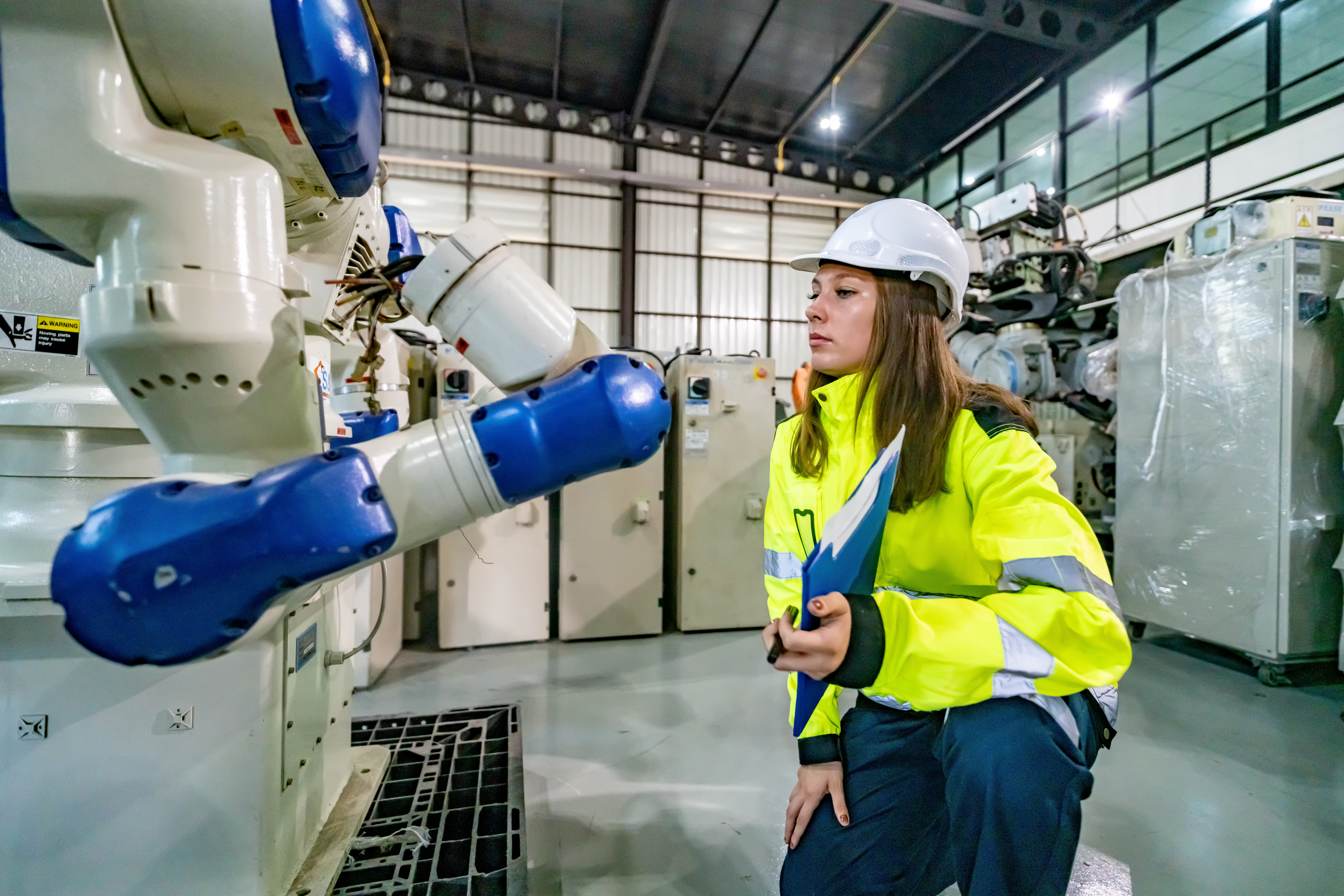
Industrial robots, collaborative robots, automated guided vehicles, and autonomous mobile robots increasingly depend on real-time sensing and computation.
Edge computing can support functions such as object detection, localization, navigation, safety monitoring, and machine vision without requiring every decision to travel through a remote cloud service.
Keeping time-sensitive processing close to the equipment can also reduce dependence on network round trips. NIST identifies low latency, high reliability, mobility, and edge computing as important considerations for wireless communication systems in factory automation environments.
Industrial HMI and Edge Visualization
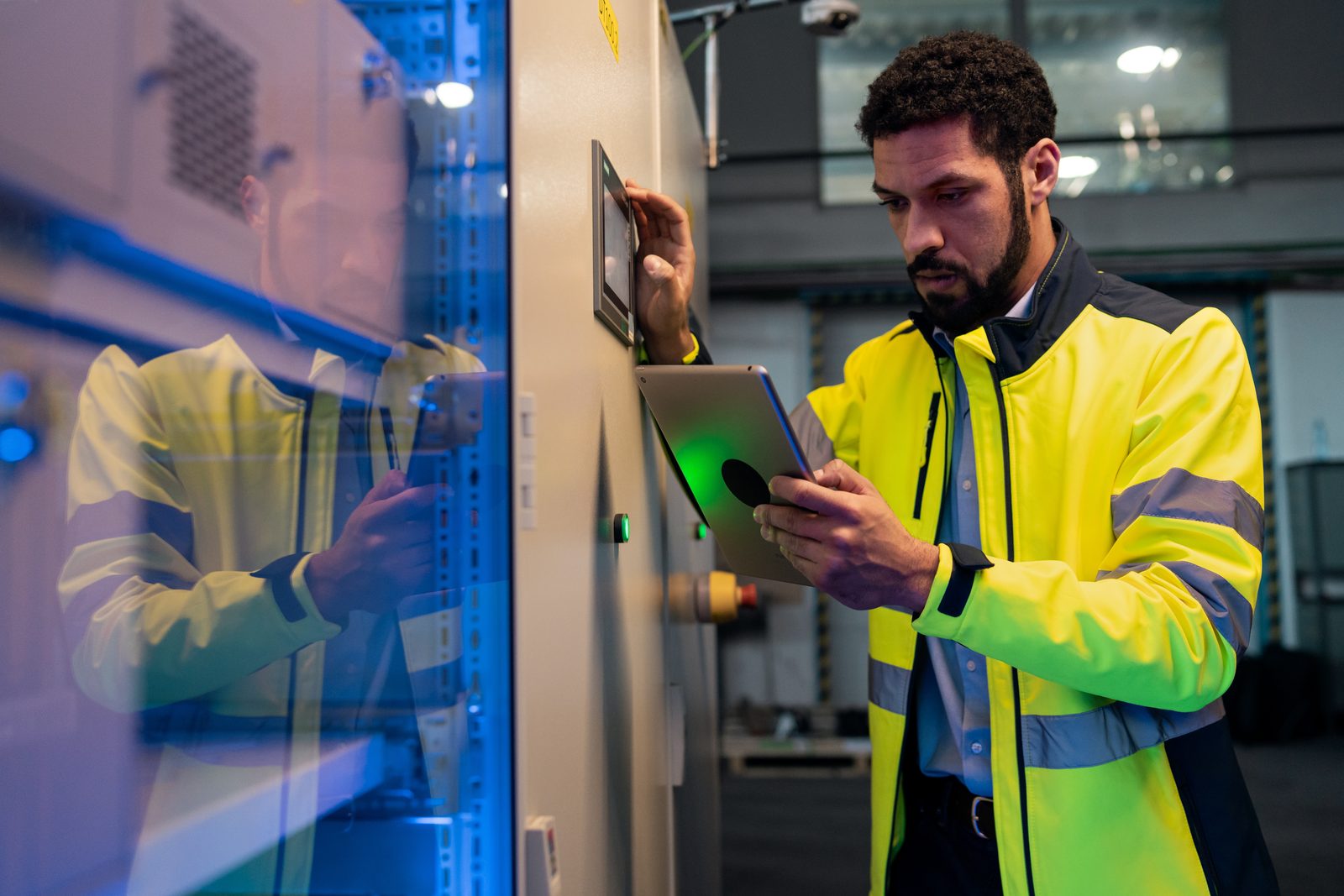
Industrial panel PCs and HMIs provide operators with direct access to production information, machine status, alarms, dashboards, and control functions.
As more analytics move to the edge, the HMI can evolve beyond simple machine control. A modern industrial panel PC may combine visualization with local data acquisition, analytics, AI inference, and communication with sensors or controllers.
This reduces the number of separate computing devices required at the machine level while giving operators more immediate access to actionable information.
Energy Monitoring and Smart Factory Management
Factories can also use industrial edge computing to collect power, equipment, and process data for energy management.
Instead of reviewing energy consumption only at the facility level, connected sensors and edge systems can help manufacturers monitor individual processes or machines in greater detail and correlate energy use with production conditions.
The U.S. Department of Energy notes that smart manufacturing technologies can combine sensors, data analytics, and process controls to provide real-time visibility into energy, productivity, and costs across manufacturing operations.